New Intranet and infrastructure designed to reduce development resource constraints and allow for easier internal content team ownership
Delta Vacations/MLT Vacations, a leading travel and leisure company, used an intranet site that desperately needed an update. Its design looked old-fashioned, like something from the early days of the internet, and users found it difficult to navigate. Information was poorly organized, making it hard to find what they needed.
A major problem was that the content team couldn't update the site itself. Even small changes required assistance from developers, creating delays and preventing the team from keeping the information fresh and accurate.
Recognizing these issues and wanting to demonstrate our team's abilities, I suggested a complete redesign of the intranet. The goal was to create a modern, user-friendly site that empowered the content team. A key part of this was implementing an easy-to-use content management system (CMS), allowing them to make updates independently, without relying on developers. Management approved the project, contingent on meeting certain requirements.
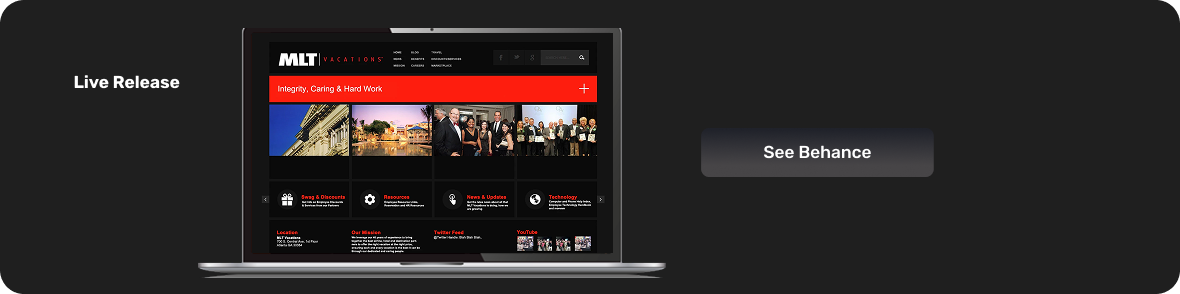
The Delta Vacations/MLT Vacations intranet is outdated and difficult to use, with a Web 1.0–style interface and disorganized information architecture. Routine content updates require developer intervention, creating bottlenecks that delay timely, accurate information and hinder the content team's efficiency.
I led the end-to-end redesign and rollout of the company intranet as art director and designer, delivering a modern, brand-aligned experience in 3 weeks—compared to the 6 months estimated by development—by leveraging a CMS and internal resources with zero additional development costs. The launch earned company-wide acclaim and repositioned the intranet as a contemporary, effective platform.
We transformed the intranet into a modern, intuitive, and self-sustaining platform that improved findability, reduced time-to-update for content teams, and aligned the digital experience with a major brand's standards. By enabling self-service through a CMS platform (we chose WordPress) and removing reliance on developers for routine changes, we accelerated content velocity, enhanced user satisfaction, and strengthened internal trust and adoption across the organization.