An enterprise-grade Gen-AI collaboration platform that enables teams to build, deploy, and manage AI-powered workflows—from data ingestion to intelligent automation.
Milvian Group pinpointed Generative AI as the next frontier — and the cornerstone of its next-generation platform. MilvianAI isn't just another tool; it's the intelligent engine designed to unify and amplify the entire Milvian ecosystem.
Think of it as the central nervous system for AI-powered enterprises — seamlessly connecting Aqueduct (smart, data-driven facility management) and Tiber (legacy-to-digital transformation for industrial & manufacturing data) into one cohesive, future-ready suite.
"The Operating System for AI-Driven Teams"
As a concept, MilvianAI was designed to be an enterprise-grade AI collaboration platform where teams don't just use AI — they build with it, deploy at scale, and manage intelligent workflows end-to-end, from raw data ingestion to autonomous decision-making. It fuses conversational AI, no-code automation, real-time collaboration, and enterprise-grade security — all within a unified, intuitive workspace.
As a first step, the team convened in Houston for a week-long in-person offsite that involved all constituent groups (Executive Leadership, Product, Marketing, Engineering, Sales, etc).
Over the week-long session, we engaged in discovery and design exercises to help define the requirements for the platform and validate ideas and concepts that we saw as key features and capabilities for the app.
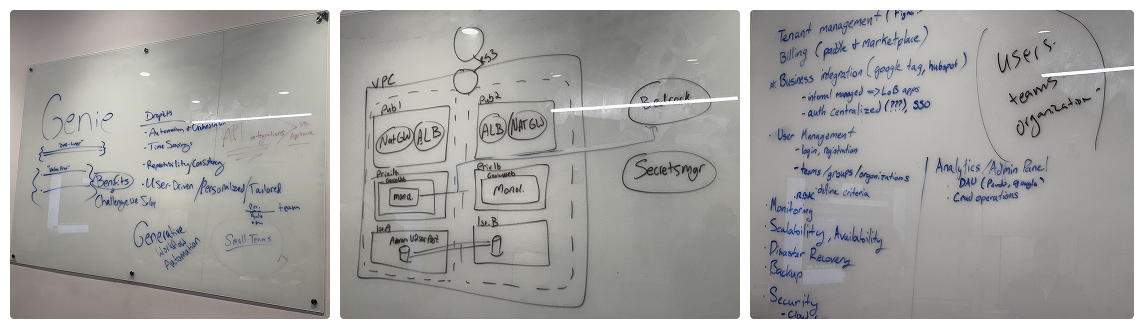
As part of some of the exercises, we performed an analysis of leading AI platforms, as well as newer ones that offered unique capabilities and features. From that exploration of competitive platforms, we identified some areas to address as we began to create MilvianAI.
Confusion around role-based access and team structures
Overwhelming UI with too many entry points
Lack of feedback after actions (e.g., "Did my automation save?")
Friction in authentication — especially for enterprise SSO users
No clear onboarding path for non-technical users
Poor discoverability of integration functionality and workflow automation tools
As Lead UX, UI Designer & Research Lead, as we left the offsite, I was tasked with delivering a unified, human-centered UX strategy across the entire MilvianAI product lifecycle, resulting in the following deliverables:
Representing diverse roles, industries, and tech proficiencies, refined from discovery exercises and market research
Scalable, role-aware navigation schema for the app and its features
Conversational interface for prompting, debugging, and iterating AI models
Micro-interactions, success/error states, undo patterns
Frictionless SSO + social authentication with progressive profiling
Simplified + Advanced views for workflow building with live previews
Intuitive creation, switching, and permissions management
OAuth flows, universal MCP connectors for broad tool accessibility
Drag-and-drop builder with AI-assisted suggestions
Support for blogs, sales outreach, and digital marketing vehicles
All deliverables were validated through internal testing, market research, analytics, and stakeholder alignment.
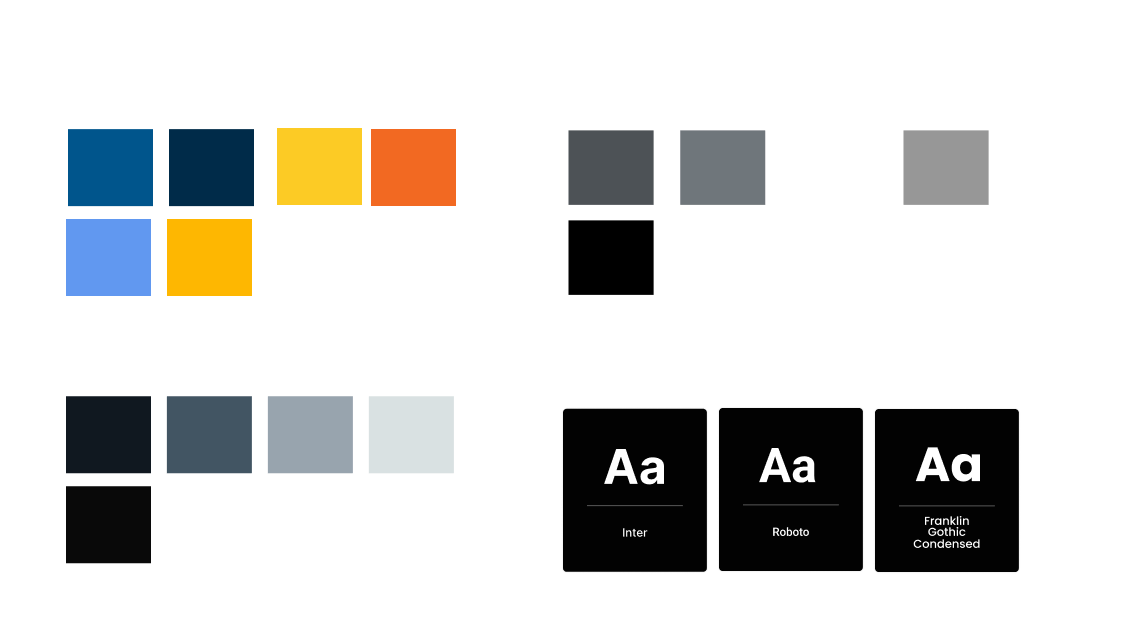
Design Approach: Started with a defined array of fonts, colors, and styles from a new expanded brand guide I was also tasked with creating. These served as inspiration for all proposed solutions and designs.
As a shift, for the beta, the colour palette was minimized to use mostly grays with an eye towards refinement for the final v.1 release.
We began by hearing users—discovering frustrations and core needs. From existing customers, friends, family members our foundation: people-first decisions, simplicity breakthrough, confidence where once stood confusion. We brought it all to life.
Key deliverables created for this effort include:
Figjam boards and followup summary decks
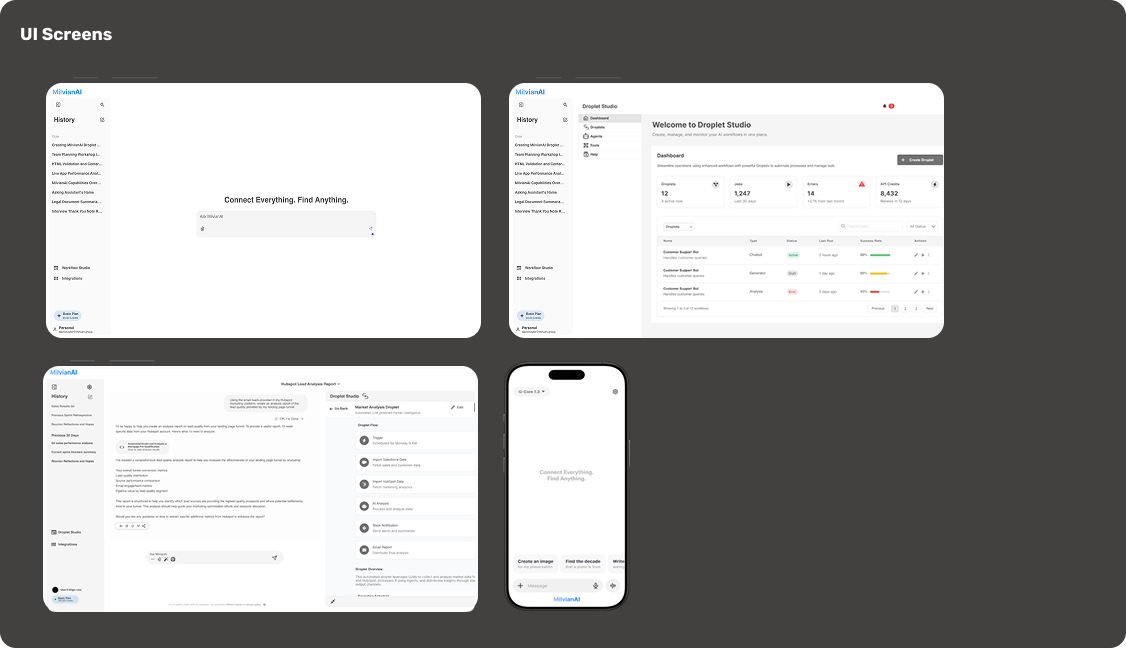
High-fidelity wireframes and site architecture
UI files with mobile optimized view planned for post v.1
Complete authentication user experience
To be implemented on a Pendo back-end
Complete team management flows
Comprehensive integration pattern library
Brand ethos translated into digital experience
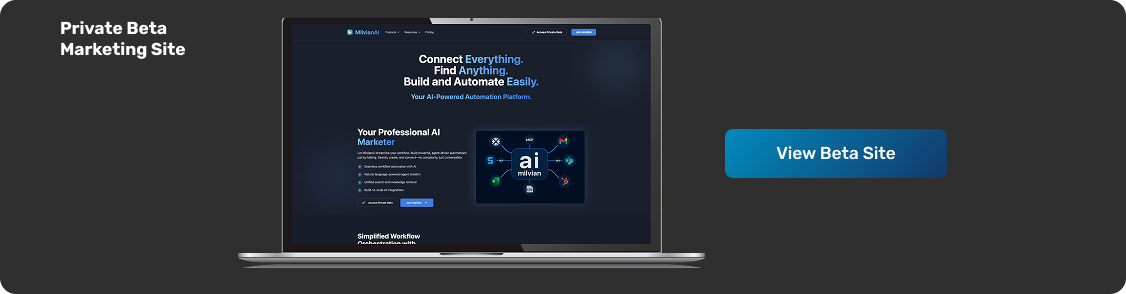
Mobile ready site
By centering UX around real people, we turned a complex AI platform into an intuitive, empowering experience that drives adoption, trust, and results. We also were able to create novel solutions to some of the common pitfalls, like overly complex screens and confusing user flows for key features like workflow automations.